Table of Contents
- Summary
- Introduction: Vietnam Is Not Just a Hardware Market
- Case Overview: Why a Large Power Bank Deployment Was Suspended
- Why WeChat Pay and Alipay Are Not Enough in Vietnam
- Vietnam Local Payment Methods: MoMo, ZaloPay, VNPay, ShopeePay
- The Hidden Problem: Deposit, Refund and Transaction Fees
- Settlement and Payout: Why Merchants Need Real-Time Visibility
- 4 Payment Requirements Before Launching in Vietnam
- Pilot Launch Checklist for Vietnam
- How JUUGO Supports Vietnam Power Bank Operators
- Frequently Asked Questions
This article covers: Why shared power bank business in Vietnam fails without proper payment integration, the limitations of international payment methods (WeChat Pay, Alipay) in Vietnam, a complete guide to local payment methods (MoMo, ZaloPay, VNPay, ShopeePay), merchant settlement requirements, deposit and refund logic challenges, and a 12-point launch checklist for Vietnam power bank operators.
Introduction: Vietnam Is Not Just a Hardware Market
Vietnam presents significant opportunities for shared power bank rental business operators. With over 100 million population, rapid smartphone adoption, growing middle class, and high-density urban environments in cities like Ho Chi Minh City and Hanoi, Vietnam is an attractive market for mobile charging infrastructure.
However, entering the Vietnam market requires more than purchasing equipment and securing venue partnerships. The critical success factor that many operators underestimate is payment infrastructure.
This article examines the payment integration challenges specific to Vietnam and provides a comprehensive guide for operators planning to launch shared power bank services in the market.
Key insight: In Vietnam, payment integration — including local e-wallets, merchant settlement, and refund logic — is the foundation of a viable shared power bank business, not an optional add-on.
Case Overview: Why a Large Power Bank Deployment Was Suspended
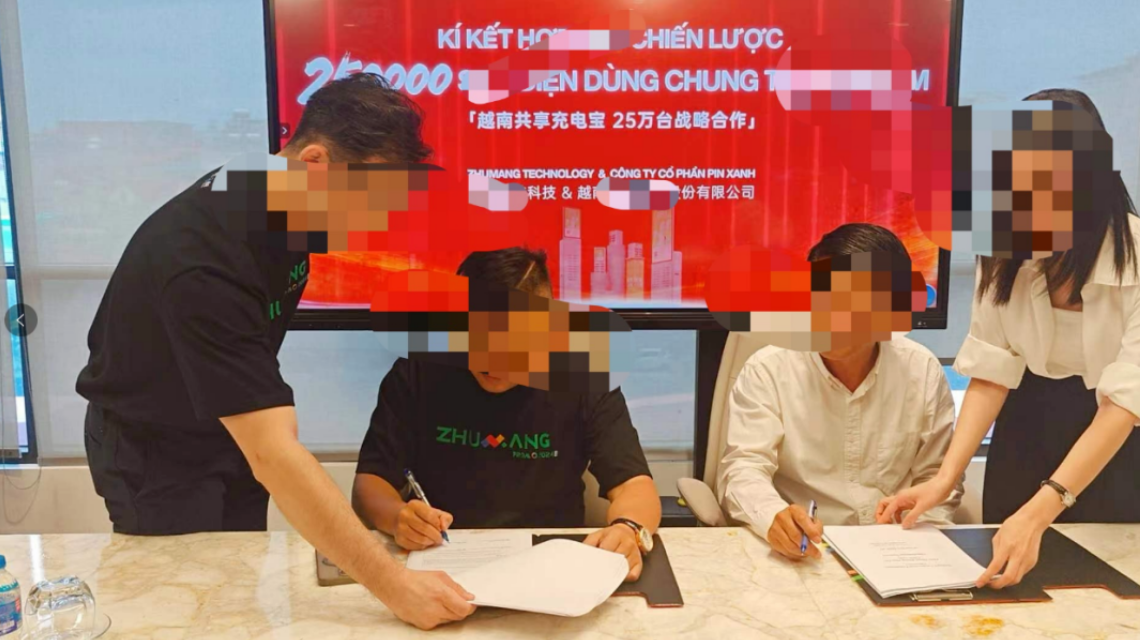
Several operators who attempted large-scale deployments in Vietnam encountered significant challenges. One documented case involved a substantial order for power bank equipment intended for national deployment across Vietnam.
The deployment was suspended after initial shipments arrived because the payment infrastructure requirements had not been properly addressed before equipment was shipped.
Key Challenge Identified
The equipment deployed relied on international payment methods that were not suitable for local Vietnamese users. This created a fundamental mismatch between the payment capabilities of the equipment and the payment preferences of the target users.
The lesson: Payment validation must precede hardware deployment, not follow it.
Why WeChat Pay and Alipay Are Not Enough in Vietnam
International QR code payment systems like WeChat Pay and Alipay have limited functionality in Vietnam for local transactions:
- Regulatory environment: Vietnam's central bank has established requirements for domestic payment processing that differ from international QR code systems
- User adoption: Vietnamese consumers primarily use local e-wallets for daily transactions, not international QR codes
- Merchant acceptance: Local merchants prefer payment methods that integrate with Vietnam's banking infrastructure
- Transaction costs: Cross-border payment solutions often carry higher transaction fees that affect business viability
Vietnam Payment Regulatory Context
Vietnam's financial regulatory framework requires that domestic electronic payments be processed through licensed payment service providers within the country's banking system. International QR codes that route transactions outside Vietnam's payment infrastructure face operational and regulatory limitations.
Vietnam Local Payment Methods: MoMo, ZaloPay, VNPay, ShopeePay
Vietnam has a mature local payment ecosystem with several dominant e-wallet and payment providers:
For Malaysia shared power bank failure case, the same principle applies — local payment methods must be prioritized over international options.
Vietnam Payment Methods for Shared Power Bank Rental
| Payment Method | User Scenario | Operator Challenge | Integration Priority |
|---|---|---|---|
| MoMo | Dominant e-wallet for daily transactions | Requires partnership with MoMo's merchant API | Essential |
| ZaloPay | Users already logged into Zalo ecosystem | Integration with Zalo's payment infrastructure | Essential |
| VNPay | Bank-backed QR payments; wide acceptance | Technical integration with VNPay gateway | Essential |
| ShopeePay | E-commerce-integrated payments | Partnership with Shopee ecosystem | Recommended |
| Bank Cards | Traditional card payments still common | Card processing integration | Recommended |
| Cash | Some users prefer cash transactions | Complex reconciliation requirements | Optional |
The Hidden Problem: Deposit, Refund and Transaction Fees
Beyond payment acceptance, shared power bank operators must address several hidden financial challenges:
Shared Power Bank Transaction Flow
- Deposit collection: User places deposit (typically VND 50,000-100,000) to start rental
- Usage charge: Rental fees deducted based on time used
- Refund process: Remaining deposit returned after power bank is returned
- Cash flow management: Operators must manage float between deposits collected and refunds paid
Each step involves transaction fees that can significantly impact profitability:
- Deposit transaction fee: Fee charged when collecting deposit
- Usage charge fee: Percentage or fixed fee on each rental transaction
- Refund transaction fee: Fee charged when processing deposit refund
- Cross-border fees: Higher fees when using international payment rails
Profitability Impact
When transaction fees apply to both deposits and refunds, the effective margin per transaction can be substantially reduced. Local payment integration reduces per-transaction costs compared to international payment solutions.
Settlement and Payout: Why Merchants Need Real-Time Visibility
Vietnam's shared power bank ecosystem involves multiple parties who require transparent and timely settlement:
- Merchants: Venue owners who host power bank stations require regular revenue sharing payments
- Field staff: Technicians who maintain and restock equipment
- Channel partners: Businesses that connect operators with venues
- Operators: The primary business managing the network
Vietnamese merchants have specific expectations regarding settlement:
Merchant Settlement Requirements in Vietnam
- Transparency: Merchants want to see exactly how revenue is calculated
- Frequency: Daily or real-time settlement preferred over weekly or monthly
- Accessibility: Funds should be withdrawable immediately, not locked in platform
- Reliability: Settlement must process successfully without errors or delays
For power bank rental business ROI, merchant settlement is a critical component that affects both partner relationships and operational cash flow.
4 Payment Requirements Before Launching in Vietnam
Before deploying shared power bank equipment in Vietnam, operators must ensure the following payment requirements are met:
1. Per-Transaction Settlement Capability
The system must support accurate tracking and settlement for each individual transaction, not just batch processing. This ensures transparency and enables real-time revenue sharing calculations.
2. Daily Settlement Cycle
Configuration for daily merchant settlement — or at minimum, next-day settlement — is essential to meet Vietnamese merchant expectations and maintain partnership stability.
3. Automated Payout System
Manual payout processes do not scale. The system must support automated, scheduled payouts to merchants with configurable split ratios.
4. Local Currency Processing
All transactions must be processed in Vietnamese Dong (VND) through Vietnam's domestic payment infrastructure, not routed through international payment networks.
Pilot Launch Checklist for Vietnam
The following checklist represents minimum validation requirements before launching shared power bank services in Vietnam:
| Category | Requirement | Priority |
|---|---|---|
| Local Payment Gateway | MoMo, ZaloPay, VNPay integrated with merchant API | Critical |
| Refund Logic | Automated refund processing through local payment methods | Critical |
| Deposit Strategy | Clear deposit/no-deposit approach; VND amount configured | Critical |
| Merchant Settlement | Daily settlement with configurable split ratios | Critical |
| Payout Schedule | Automated payout to merchant accounts (same-day preferred) | High |
| Local Company/Account | Vietnamese business entity or licensed payment partner | High |
| Vietnamese Language UI | User interface in Vietnamese; payment confirmations localized | High |
| Customer Support | Vietnamese language support capability (chat/phone) | Medium |
| 4G/SIM Compatibility | Equipment tested with Vietnamese carriers (Viettel, Mobifone, Vinaphone) | High |
| Pricing Strategy | VND pricing configured; competitive local market rates | Medium |
| Pilot City Selection | Ho Chi Minh City or Hanoi pilot; 50-100 units for validation | Medium |
| Dashboard Reporting | Real-time transaction data, settlement reports, merchant analytics | High |
How JUUGO Supports Vietnam Power Bank Operators
JUUGO provides a complete shared power bank business solution with Vietnam-specific payment integration:
JUUGO Vietnam Payment Integration
- Pre-integrated local payments: MoMo, ZaloPay, VNPay, ShopeePay
- Local currency processing: All transactions in VND through domestic rails
- Merchant settlement system: Daily settlement with configurable split ratios
- Refund automation: Automated refund processing through local payment methods
- Dashboard with local language: Vietnamese-language reporting and analytics
- Pilot deployment support: Market validation before full-scale deployment
For how to choose a power bank franchise supplier, operators should prioritize vendors who can demonstrate Vietnam-specific payment integration capabilities.
Frequently Asked Questions
Q: Is Vietnam a good market for shared power bank business?
Vietnam presents both opportunities and challenges. The market has high smartphone adoption, growing digital payment usage, and significant urban foot traffic. However, success requires proper payment integration with local e-wallets, not international QR codes. Market opportunity does not automatically translate to business success without the right infrastructure.
Q: What payment methods are needed for power bank rental in Vietnam?
Essential payment methods include MoMo (dominant e-wallet), ZaloPay (Zalo ecosystem integration), and VNPay (bank-backed QR standard). These three cover the majority of Vietnamese digital payment users. ShopeePay integration is recommended for additional coverage, particularly among younger demographics.
Q: Can WeChat Pay or Alipay be used for Vietnam shared power bank rental?
WeChat Pay and Alipay have limited functionality for local Vietnamese transactions. International QR codes face regulatory limitations and higher transaction costs compared to local payment methods. For viable operations, local e-wallet integration is essential.
Q: Why is merchant settlement important?
Merchant settlement is critical because venue partners expect transparent, timely revenue sharing. Vietnamese merchants particularly value daily settlement visibility and quick fund accessibility. Unclear or delayed settlement terms can cause venue partnerships to deteriorate quickly.
Q: How many devices should I deploy for a Vietnam pilot?
A pilot deployment of 50-100 units across 3-5 strategic locations in Ho Chi Minh City or Hanoi is recommended. This scale allows validation of payment integration, merchant settlement, device reliability, and user adoption before committing to larger-scale deployment.
Q: How can JUUGO help with Vietnam payment integration?
JUUGO provides pre-integrated Vietnam payment methods (MoMo, ZaloPay, VNPay, ShopeePay), local currency processing, automated merchant settlement system, refund automation, and Vietnamese-language dashboard. Contact JUUGO for Vietnam market entry consultation.
Related Articles
Key Takeaways
The Vietnam market demonstrates that payment infrastructure determines operational viability for shared power bank business.
Before shipping power bank stations to Vietnam, validate payment integration, refund logic, merchant settlement, and local user flow. Local payment integration is not optional — it is the foundation of a viable business.