Table of Contents
- Summary
- Introduction: Why Southeast Asia Looks Attractive
- Case Overview: What Happened in Malaysia
- Mistake 1: Buying Hardware Before Validating Local Payment
- Mistake 2: Overestimating Premium Venue Resources
- Mistake 3: Ignoring Local User Payment Habits
- Mistake 4: Choosing a Factory Instead of a Full Solution Provider
- Mistake 5: No Local Operations and After-Sales System
- Malaysia Payment Checklist: TNG, Boost, GrabPay, Bank Cards, Settlement
- What Operators Should Validate Before Buying Equipment
- How JUUGO Helps Reduce Launch Risk
- Frequently Asked Questions
This article covers: Why shared power bank businesses fail in Southeast Asia, with a detailed Malaysia case study covering approximately RMB 2 million in losses over 3 years. You will learn the 5 critical mistakes operators make, a Malaysia payment integration checklist (TNG, Boost, GrabPay, DuitNow, settlement requirements), and 10 validation points before purchasing equipment. This guide is essential for franchise operators, POS companies, and payment providers planning to enter the Southeast Asian market.
Introduction: Why Southeast Asia Looks Attractive — and Why It's Easy to Misjudge
Southeast Asia presents a compelling opportunity for shared power bank rental business operators. With over 700 million population, rapid smartphone adoption, growing middle class, and high-density urban environments, the region appears ideal for mobile charging infrastructure.
However, many operators who entered the market with optimism discovered that market potential does not automatically translate to business success. The gap between market attractiveness and actual operational outcomes is often wider than expected.
This article examines a real Malaysia deployment case where a local investor deployed approximately 2,000 power bank units across premium locations but faced significant challenges that ultimately resulted in extended operational difficulties.
Key insight: In Southeast Asia, payment integration, merchant settlement, and localized user experience matter more than hardware quality or venue placement alone.
Case Overview: What Happened in Malaysia
In 2022, a Malaysian investor attended an industry conference in Shenzhen and observed the widespread adoption of shared power bank services in China. The convenience of scanning a QR code, renting a power bank, and returning it at any location impressed the investor, who recognized similar potential in the Malaysian market.
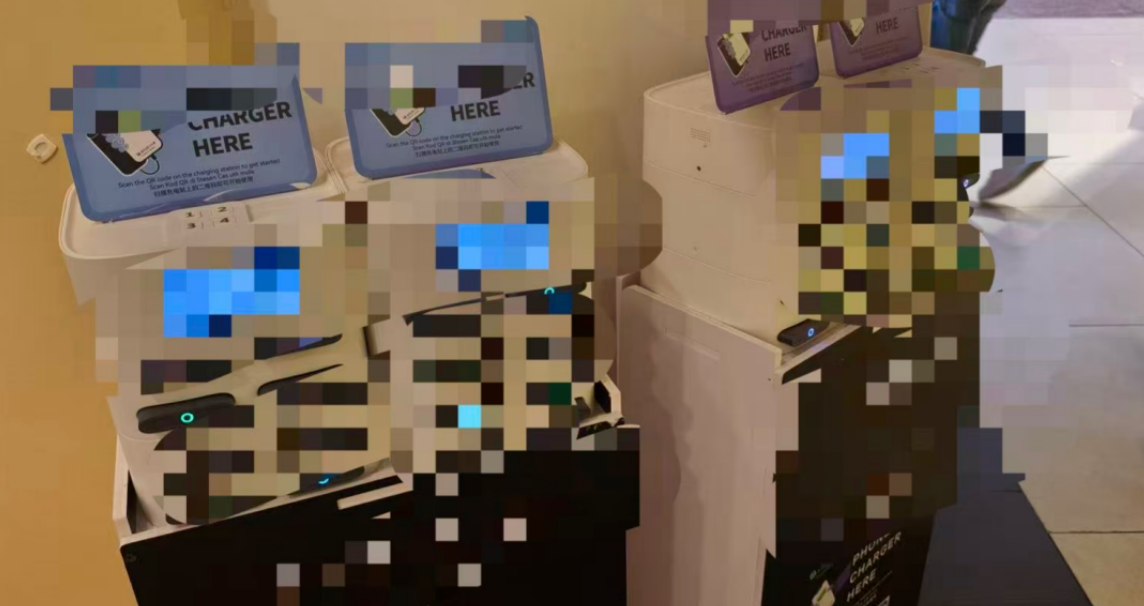
The investor secured partnerships with several premium venue types including shopping mall locations, restaurant chains, and entertainment venues across Malaysia. With these relationships established, the investor proceeded to purchase approximately 2,000 power bank kiosk units from a Chinese supplier.
The initial deployment encountered immediate challenges:
Device Integration Issues
- Power banks did not dispense correctly after QR code scan in some locations
- Devices showed offline status despite network connectivity in venue
- Charging status failed to update after power bank return, causing billing disputes
Payment System Gaps
- Touch 'n Go eWallet (TNG) — not integrated
- Boost — not integrated
- GrabPay — not integrated
- DuitNow — not integrated
- Only international QR codes (WeChat Pay, Alipay) were functional
For Malaysian users — who primarily use local e-wallets for daily transactions — the inability to pay with familiar methods created a significant barrier to adoption. Tourists represented only a small fraction of foot traffic in most locations.
Mistake 1: Buying Hardware Before Validating Local Payment Integration
The most critical error in this case was the sequence of decisions. The investor purchased hardware before confirming that local payment methods were supported by the equipment.
When the investor approached the supplier about integrating Touch 'n Go, Boost, and GrabPay, the response indicated that each payment interface would require additional development and cost — approximately RMB 50,000 per payment method.
Financial Impact
For a deployment requiring 5-6 local payment methods, the additional integration cost alone could reach RMB 250,000-300,000 — on top of hardware investment already made.
For power bank franchise suppliers, payment integration should be a core capability, not an add-on service. Operators should verify payment compatibility before committing to any equipment purchase.
Mistake 2: Overestimating Premium Venue Resources
Having relationships with premium venues — shopping malls, restaurant chains, and entertainment venues — appeared to be a competitive advantage. However, venue relationships alone do not guarantee operational success.
What Premium Venues Actually Provide
- High foot traffic — valuable only if users can complete transactions
- Brand credibility — helpful only if the product works reliably
- Space allocation — meaningless without functional equipment
The lesson: Operators should evaluate whether their venue partnerships can support actual user transactions, not just foot traffic numbers. A venue with 1,000 daily visitors is not valuable if 90% cannot complete a rental due to payment barriers.
Mistake 3: Ignoring Local User Payment Habits
Each Southeast Asian market has distinct payment preferences. In Malaysia specifically:
- Touch 'n Go eWallet — widely used for transit, parking, and retail
- Boost — popular for online shopping and in-store payments
- GrabPay — integrated with Grab super-app used by millions
- DuitNow — bank-backed QR payment standard
- Contactless cards — Visa and Mastercard are common
International QR codes like WeChat Pay and Alipay have limited adoption among local Malaysian consumers. Deploying equipment that only accepts these payment methods effectively excludes the majority of potential users.
For Vietnam power bank payment integration case, the same principle applies — local payment methods must be prioritized over international options.
Mistake 4: Choosing a Factory Instead of a Full Solution Provider
The supplier in this case was primarily a hardware manufacturer. While the equipment functioned mechanically, the support infrastructure for overseas deployment — including payment integration, merchant settlement logic, user interface localization, and after-sales service — was insufficient.
Factory vs. Solution Provider: Key Differences
- Factory: Sells hardware, minimal software support, limited overseas experience
- Solution Provider: Provides complete system including hardware, software, payment integration, operations support, and market-specific configuration
For how to choose a power bank franchise supplier, operators should evaluate whether the supplier can support the entire deployment lifecycle, not just deliver equipment.
Mistake 5: No Local Operations and After-Sales System
When devices malfunctioned or users encountered issues, the support infrastructure was not adequate for the Malaysian market:
- Customer support was conducted in Mandarin only
- Technical troubleshooting required coordination with Shenzhen-based team
- Replacement parts shipment from China caused extended downtime
- No local service technician presence
Power bank rental business operations require responsive local support. Users expect immediate assistance when devices fail or transactions encounter issues. A 48-72 hour response time from overseas is not acceptable for consumer-facing services.
Malaysia Payment Checklist: TNG, Boost, GrabPay, DuitNow, Bank Cards, Settlement
Before launching a shared power bank business in Malaysia, operators must validate the following payment integration requirements:
| Payment Method | Integration Priority | Key Considerations |
|---|---|---|
| Touch 'n Go eWallet (TNG) | Essential | Most widely used e-wallet in Malaysia; required for mass adoption |
| Boost | Essential | Popular among online shoppers and younger demographics |
| GrabPay | Essential | Super-app integration reaches Grab's 10M+ Malaysian users |
| DuitNow QR | Essential | Bank-backed national QR standard; interbank compatibility |
| Contactless Cards | Recommended | Visa/Mastercard tap-to-pay; important for tourists |
| Merchant Settlement | Critical | Real-time or next-day settlement to venue partners; configurable split ratios |
What Operators Should Validate Before Buying Equipment
The following checklist represents the minimum validation requirements before purchasing shared power bank equipment for the Malaysian market:
| Risk Area | Common Mistake | Why It Matters | What to Check |
|---|---|---|---|
| Local Payment Gateway | Assuming international QR codes are sufficient | 90%+ users cannot complete transactions | Confirm TNG, Boost, GrabPay, DuitNow integration before purchase |
| Merchant Settlement | No clarity on settlement timeline or split ratios | Venues lose trust; partnerships collapse | Verify real-time settlement capability and configurable merchant splits |
| Local Company Registration | Operating without proper business entity | Legal compliance; payment account access | Confirm supplier can support or guide local registration process |
| SIM Card / 4G Compatibility | Equipment incompatible with local carriers | Devices show offline status; no transactions | Test with Malaysian SIM cards (Maxis, Digi, Celcom, U Mobile) |
| After-Sales Support | No local technician presence | Extended downtime; user complaints | Confirm local support team or regional service center |
| Spare Parts Availability | Waiting weeks for replacement parts from China | Prolonged equipment failure; lost revenue | Verify local or regional spare parts inventory |
| SaaS Dashboard | No visibility into real-time operations | Cannot manage network efficiently | Demo multilingual dashboard with Malaysian market configuration |
| Refund Logic | Users charged after returning power bank | Customer complaints; negative reviews | Test full rental cycle including edge cases (failed return, offline) |
| User Support | Support in Mandarin only | Malaysian users cannot get help | Confirm English and Bahasa Malaysia support capability |
| Pilot City Plan | Deploying everywhere at once without validation | Wasted investment on non-performing locations | Start with 2-3 pilot cities; measure data before scaling |
How JUUGO Helps Reduce Launch Risk
JUUGO provides a complete shared power bank business solution designed specifically for Southeast Asian market requirements:
What JUUGO Provides
- Pre-integrated payment methods: TNG, Boost, GrabPay, DuitNow, and regional e-wallets
- Configurable merchant settlement: Real-time settlement with customizable split ratios
- SaaS platform with dashboard: Real-time monitoring, maintenance alerts, revenue analytics
- Multilingual user interface: English, Bahasa Malaysia, Chinese, and local languages
- Regional service support: Local technicians and spare parts in Southeast Asia
- Market validation: Pilot deployment support before full-scale investment
For operators evaluating power bank rental business ROI, JUUGO's complete system approach reduces the operational risks that led to the Malaysia case study outcomes.
Frequently Asked Questions
Q: Is Malaysia a good market for shared power bank business?
Malaysia presents both opportunities and challenges. The market has high smartphone penetration, established e-wallet infrastructure (TNG, Boost, GrabPay), and significant urban foot traffic in shopping malls, restaurants, and entertainment venues. However, success requires proper payment integration with local e-wallets, reliable equipment, and responsive local operations support. Market opportunity alone does not guarantee business success.
Q: Why do shared power bank projects fail in Southeast Asia?
Common failure factors include: (1) payment integration gaps — deploying equipment without local e-wallet support; (2) merchant settlement issues — unclear or delayed settlement to venue partners; (3) equipment reliability — devices that frequently malfunction or show offline status; (4) lack of local support — customer service and technical support that cannot communicate in local languages; (5) hardware-first approach — buying equipment before validating market requirements.
Q: What payment methods are important in Malaysia?
Essential payment methods include Touch 'n Go eWallet (TNG), Boost, GrabPay, and DuitNow QR. These are the primary payment options for Malaysian consumers. International QR codes like WeChat Pay and Alipay have limited local adoption. Contactless card payment (Visa, Mastercard) is also recommended, particularly for tourist areas.
Q: Should I buy power bank machines from a factory or solution provider?
For overseas deployment, a solution provider is strongly recommended over a hardware-only factory. A solution provider offers integrated payment support, merchant settlement logic, multilingual user interface, operational dashboard, and after-sales service. A factory may offer lower unit prices but lacks the infrastructure to support successful overseas operations. Review our supplier evaluation guide for detailed criteria.
Q: How many units should I deploy for a Malaysia pilot?
A pilot deployment of 50-100 units across 2-3 strategic locations is recommended for initial market validation. This allows operators to measure key metrics (transaction volume, payment success rate, merchant settlement accuracy, device uptime) before committing to larger-scale investment. Pilot data should inform both equipment quantity and venue selection for full deployment.
Q: How can JUUGO support Malaysia power bank operators?
JUUGO provides end-to-end support including pre-integrated Malaysian payment methods (TNG, Boost, GrabPay, DuitNow), configurable merchant settlement system, multilingual SaaS platform, regional service technician network, spare parts availability in Southeast Asia, and pilot deployment planning support. Contact JUUGO for a Malaysia market entry consultation.
Related Articles
Key Takeaways
The Malaysia case demonstrates that shared power bank business success in Southeast Asia requires more than hardware and premium venues. Payment integration with local e-wallets, reliable merchant settlement, responsive after-sales support, and market-specific validation are essential prerequisites.
Before purchasing equipment, operators should complete the validation checklist and confirm that their chosen supplier can support the complete operational requirements of the target market.