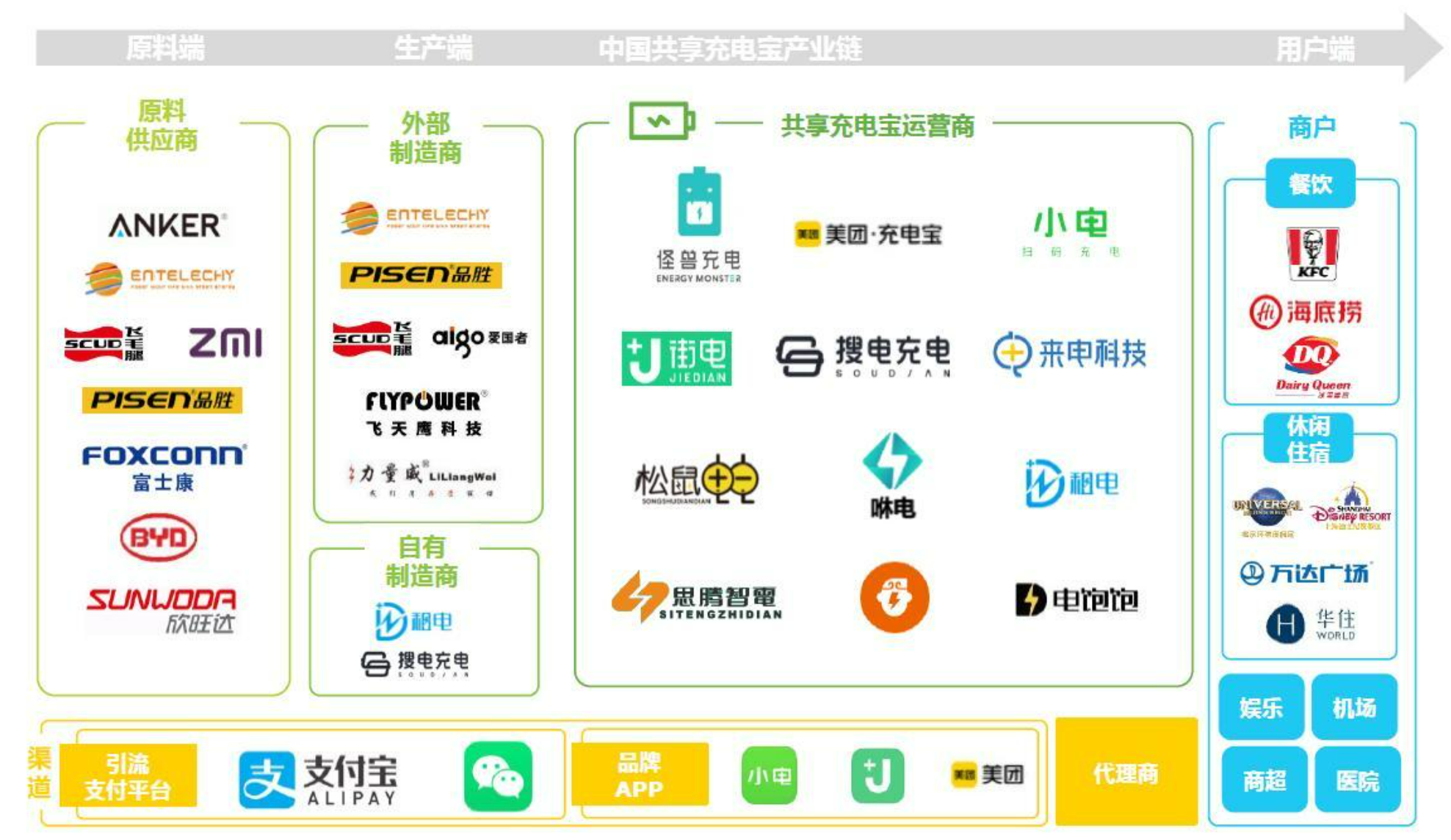
When overseas investors first hear about the shared power bank business, they usually ask three direct questions: Is this business profitable? How long does it take to recover the investment? Can I make money immediately after buying the equipment? These are important questions. But if you only evaluate this business by the price of the equipment, you may misunderstand how the shared power bank industry really works.
📊 Key Takeaways
- Shared power bank is a long-term cash flow business — not a simple hardware purchase
- Success depends on location quality, network density, payment experience and local operation
- ROI improves significantly with scale — 500 units can generate 5× the monthly net profit of 100 units
- The most common failure: buying equipment without solving payment, operations and venue access
- The right partner offers hardware + software + payment + operation support — not just devices
A shared power bank business is not simply a hardware purchasing project. It is a long-term cash flow business based on offline location networks, mobile payment, SaaS software, merchant cooperation and localized operation. The equipment is only the starting point. What truly determines success is the quality of locations, user habits, payment experience, system stability, merchant revenue sharing and continuous local operation.
The return does not come from one single machine. It comes from building a scalable city-level rental network.
1. What Is the Shared Power Bank Business?
The shared power bank business is a rental model where operators place power bank rental stations in high-traffic venues such as restaurants, bars, shopping malls, airports, tourist attractions, hotels, events, transportation hubs and nightlife venues.
Users can rent a portable power bank by scanning a QR code, using NFC, paying by card or using a local e-wallet. After charging their phone, they can return the power bank to the same station or another compatible station in the network. The operator earns rental income from each transaction and usually shares part of the revenue with the venue owner or merchant.
Why the Model Works
- Users have a strong need when their phone battery is low
- Merchants want to provide extra convenience to customers
- The same device can generate repeated rental income
- Software can manage devices, orders, users, payments and revenue sharing
- Once location density increases, users gradually form a habit of renting
In other words, this is not just a machine-selling business. It is a combination of offline network + SaaS platform + payment system + local operation.
2. Why This Business Is Not Just About Buying Equipment
Many investors start with one question: "How much does one power bank rental station cost?"
Of course, equipment cost matters. But it is not the most important question.
The better questions are:
| What You Should Ask | Why It Matters |
|---|---|
| Where will the station be placed? | Location quality directly determines daily rentals |
| How many people will see it every day? | Foot traffic = revenue potential |
| Is the payment process smooth? | Failed payments = lost revenue |
| Will the merchant cooperate? | Merchant visibility drives user awareness |
| Is the backend system stable? | Downtime = zero income |
| Who will maintain the devices? | Maintenance cost affects net margin |
| Can users return the power bank conveniently? | Easy return = higher repeat usage |
The real logic of this business is not buying cheap equipment. It is placing reliable equipment into locations that can continuously generate rental income.
3. How the Revenue Model Works
The main revenue source is user rental income. Common pricing models include hourly rental fee, pay-per-use model, daily price cap, overtime fee, lost power bank fee, membership plan, advertising screen income and merchant co-marketing.
Core Revenue Logic
A customer rents a power bank in a restaurant, bar or mall and pays a rental fee. After deducting payment processing fees, merchant revenue share, maintenance cost, equipment depreciation and operation cost, the remaining amount becomes the operator's profit.
That is why the shared power bank business attracts investors looking for a scalable and asset-backed cash flow model — the same device does not only create one-time revenue, it keeps producing income.
4. Shared Power Bank ROI Calculation
A basic ROI formula for a single station:
Basic ROI Formula
Monthly Net Profit = Monthly Rental Revenue − Merchant Share − Payment Fee − Maintenance − Operation Cost
Payback Period = Total Unit Cost ÷ Monthly Net Profit
Simplified Example
| Item | Example Value |
|---|---|
| Total unit cost (station + power banks + logistics + setup) | RMB 1,200 – 1,600 |
| Monthly rental revenue | ~RMB 500 |
| Merchant share + fees + maintenance | ~RMB 250 |
| Monthly net profit | ~RMB 250 |
| Estimated payback period | ~4.8 – 6.4 months |
⚠️ Important Disclaimer
The figures above are simplified examples for illustration only. Actual ROI depends on the local market, rental price, location quality, merchant share ratio, payment method, device utilization rate and operation efficiency. Do not treat these as guaranteed returns.
The model shows one important point: the key to ROI is not the machine itself — the key is whether the machine can enter high-frequency usage scenarios.
5. Why Scale Matters More Than a Small Trial Order
Many overseas buyers want to start with a very small order — 50 or 100 units. This is understandable. But from an operation perspective, a very small deployment creates several problems:
| Problem | Why It Happens |
|---|---|
| Weak user awareness | Too few stations — users don't feel the service is everywhere |
| Low return convenience | Users can rent but can't easily return nearby — repeat usage drops |
| High fixed operation cost | 100 units and 500 units both need team, storage, customer service |
| Lower merchant confidence | Small brands are harder to pitch to good venues |
Scale Comparison Example
If each station generates RMB 400 monthly net profit:
100 units → RMB 40,000 / month
500 units → RMB 200,000 / month
The basic team cost may not increase proportionally, but the revenue potential changes dramatically. Scale is what makes this business model work.
6. Best Locations for Shared Power Bank Deployment
The best locations share three characteristics: high foot traffic, long customer dwell time, and high mobile phone dependency.
| Venue Type | Why It Works |
|---|---|
| Bars & nightclubs | Long stay time, high phone use, battery anxiety common |
| Restaurants | Dwell time 30–90 min, users active on phones |
| Shopping malls | High foot traffic, repeat visits |
| Airports & transit hubs | Captive users with long wait times |
| Tourist attractions | Heavy phone use for photos, navigation, payments |
| Hotels & resorts | Guests need charging, often forget chargers |
| Universities | Young user base, mobile-first behavior |
| Event venues & stadiums | High density, phone-dependent environment |
Nightlife and tourism venues often perform best because users stay longer, use their phones more frequently and are more likely to experience battery anxiety.
7. Software, Payment and Local User Experience
Many shared power bank projects fail not because the hardware is bad, but because the software and payment experience are not localized. Overseas markets are different from China. Each country has different payment habits.
What a Mature System Must Support
If the user scans the QR code but the page loads slowly, payment fails, or return locations are inconvenient — even a great location will lose customers.
So when choosing a supplier, do not only ask about hardware price. Ask: Does this supplier have real software development capability? Can it integrate local payment? Can it support long-term operation?
8. Common Mistakes Overseas Investors Make
| Mistake | Why It Causes Problems |
|---|---|
| Only comparing hardware prices | Unstable system and poor payment flow cost far more than hardware savings |
| Believing equipment alone makes money | Without local operation, machines are just inventory |
| Starting with too few stations | Users can't form habits; merchants don't trust small brands |
| Ignoring local payment methods | Conversion rate collapses if payment doesn't match user habits |
| Choosing a factory without software capability | Generic third-party systems can't support complex localization |
| Thinking only about short-term ROI | This is a city-level network business — long-term thinking required |
⚠️ The Most Common Pattern
Most investors who lose money treat this as a passive hardware business. The concept is sound — but execution, localization and operational commitment are what separate profit from loss.
9. How to Choose the Right Shared Power Bank Partner
A reliable partner should not only sell equipment. It should help you understand the entire business model. Before choosing a supplier, check whether they can provide:
What the Right Partner Provides
The right supplier for overseas investors combines: hardware + software + payment + operation experience + long-term cooperation. This is the difference between a simple manufacturer and a real business partner.
10. Final Thoughts: Is the Shared Power Bank Business Profitable?
Yes, the shared power bank business can be profitable. But not everyone can make money from it.
The opportunity is real. According to recent market research, the global shared power bank market is estimated at USD 1.80 billion in 2026 and projected to reach USD 4.94 billion by 2033. Smartphone dependency, mobile payment adoption and tourism recovery continue to drive demand.
The 4 Capabilities of Successful Operators
- Secure high-quality, high-traffic locations
- Build enough station density for users to form habits
- Provide smooth payment and rental experience
- Continue local operation, data optimization and merchant management
For overseas investors, the most important decision is not finding the cheapest shared power bank station. It is finding a partner who understands the industry, has strong software capability, supports local payment integration and is willing to help you verify and scale the business in your market.
Related Shared Power Bank Business Guides
Power Bank Rental Business ROI: 6 Revenue Streams
Deep dive into all 6 revenue streams including rental fees, platform fees, advertising and agent margins.
power bank rental ROI analysis →How to Start a Shared Power Bank Business in 2026
Complete step-by-step guide covering equipment, SaaS platform, payment and 7-step launch plan.
start a shared power bank business →How to Choose a Power Bank Franchise Supplier
10 questions you must ask before sourcing overseas — factory vs. solution provider.
shared power bank supplier selection →Vietnam Payment Integration Failure Case
$50K lesson: why payment gateway integration matters more than hardware quality.
payment integration risks →❓ Frequently Asked Questions
Is the shared power bank business profitable?
Yes, it can be profitable if the operator secures high-traffic locations, builds enough station density, provides convenient payment methods and manages local operation properly. But it is not a passive business — success requires ongoing operational commitment and localization.
How much does it cost to start a power bank rental business?
The startup cost depends on the number of stations, station type, shipping, tax, software, payment integration and local operation cost. A serious city-level launch typically requires enough equipment scale to support user habit formation and justify team operation costs.
What are the best locations for power bank rental stations?
Bars, restaurants, shopping malls, airports, tourist attractions, hotels, universities, hospitals, events and transportation hubs are high-potential locations. Nightlife venues and tourist areas typically perform best due to longer dwell time and higher phone usage.
Do I need local payment integration?
Yes. Local payment integration is critical. Different markets may require credit card, QR code payment, NFC, POS terminal or local e-wallet support. If the payment flow fails or is inconvenient, even a great location will lose customers and revenue.
How do I choose a shared power bank supplier?
Choose a supplier with hardware quality, self-developed software, payment integration capability, overseas experience, multi-language support and a clear understanding of local operation. The right partner helps you understand the entire business model, not just sells equipment.
Why does scale matter in the shared power bank business?
Scale improves user awareness, return convenience, fixed cost efficiency and merchant confidence. A small pilot with too few units cannot form user habits or justify fixed operational costs. Most successful operators start with enough scale to validate the model properly before expanding.
Planning to Start a Shared Power Bank Business in Your Market?
Contact JUUGO TECH to get a customized ROI analysis, equipment plan and local payment solution.
The shared power bank business is not just about one machine. It is about building a city-level charging network. The operator who builds the network first will have a stronger chance to win the market.