- Summary
- Why China Is the Reference Market
- China Market Timeline: 2015-2026
- From Fake Demand to Daily Habit
- Why Network Density Changed Everything
- China vs Overseas Markets
- Why Operators Failed or Succeeded
- What 3M Device Sales Mean for the Industry
- Lessons for Global Operators
- China vs Southeast Asia / Japan
- Why Payment Companies Are Entering
- Frequently Asked Questions
Summary
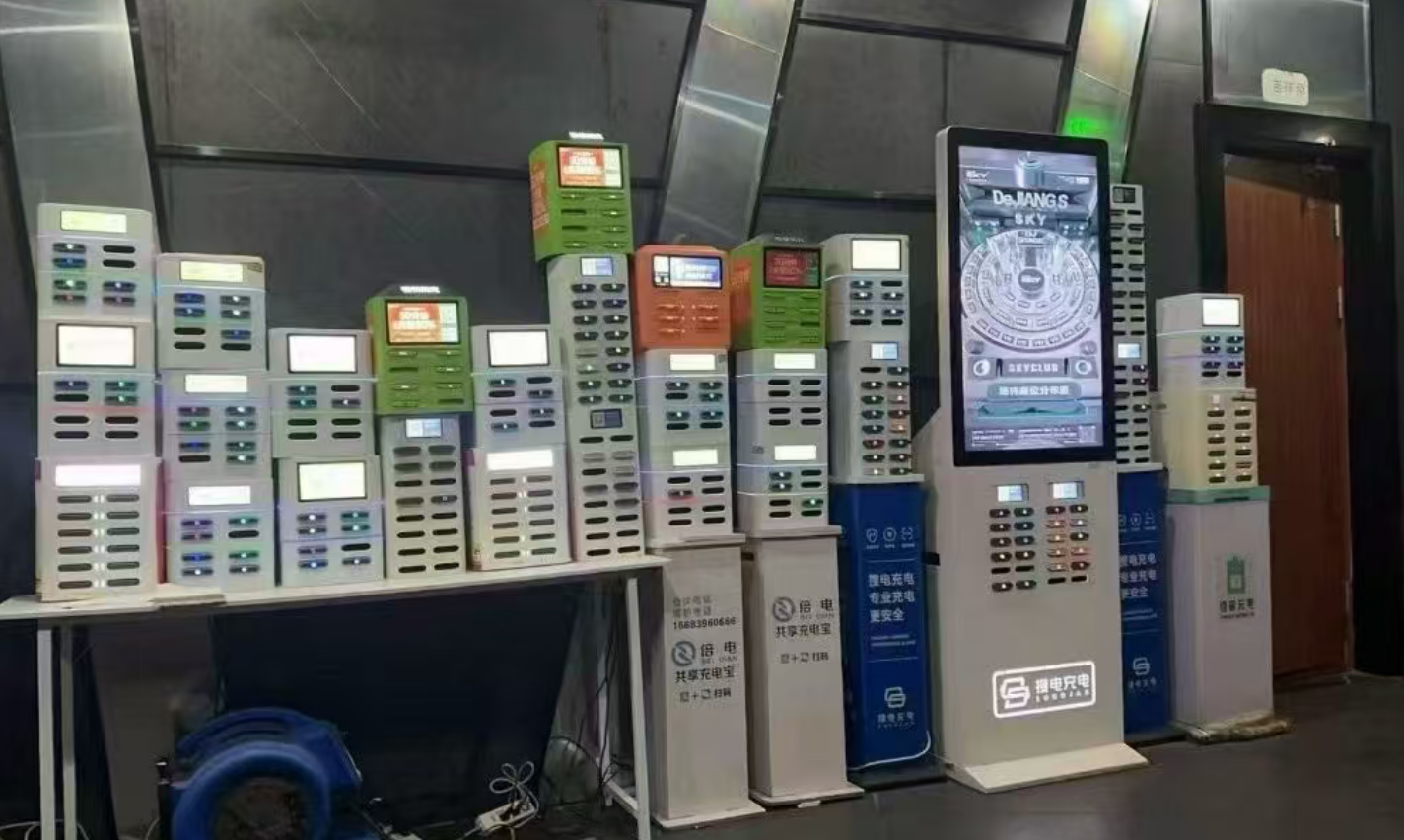
China's shared power bank market has evolved from a dismissed "fake need" in 2015 into a deployed base of 7M+ devices generating millions of daily transactions. This 11-year journey — from free trials to network-density warfare, from premium-only strategy to full-coverage expansion, and from startup experimentation to institutional investment — offers the world's most complete operational playbook. Global operators entering Southeast Asia, Japan, and emerging markets can leverage these hard-won lessons to avoid costly mistakes and accelerate their path to profitability.
If you visit China today, shared power banks are as common as Wi-Fi — available in shopping malls, restaurants, bars, airports, convenience stores, and even small county towns. This ubiquity didn't happen overnight. It took 11 years of experimentation, fierce competition, and repeated model reconstruction to build what is now the world's most mature shared power bank ecosystem. For any operator considering this business in Southeast Asia, Japan, or any global market, understanding China's journey is not optional — it is the single most valuable strategic asset you can have.
China Market Timeline: 2015–2026
| Period | Phase | Key Development |
|---|---|---|
| 2015 | Origins | First shared power bank prototypes deployed in Shenzhen. No unified industry name. Market dismissed as "fake demand." |
| 2016 | Early Adoption | Users began adopting slowly. Free trials and extreme low pricing (0.5 yuan/hour). Almost no operator was profitable. |
| 2017 | Capital Entry | Venture capital flooded in. Monster Charging, JieDian, and other major brands founded. The "location war" began. |
| 2018–2019 | Density War | Shift from premium-only to full-coverage strategy. Operators blanketed restaurants, foot massage shops, small hotels, and street-side stores. |
| 2020 | Consolidation Begins | Market shakeout. Direct-operation teams struggled. Agent-based networks expanded aggressively using local relationships. |
| 2021–2022 | Giant Entry | Meituan entered the market with built-in merchant relationships. Market concentration jumped to ~60%. IPOs validated the model. |
| 2023–2024 | Brand Proliferation | Thousands of brands emerged. Agent model flourished. Payback periods extended but business remained viable. Payment companies began entering. |
| 2025 | 3M Device Milestone | Approximately 3 million devices sold in a single year. Coverage reached county towns, border areas, and mountain regions. |
| 2026 | Global Expansion | Chinese operators and manufacturers begin targeting Southeast Asia, Japan, Korea, Middle East, and other international markets. |
Based on industry observation, the Chinese market sold approximately 3 million shared power bank devices in 2025, with an estimated installed base exceeding 7 million units nationwide.
From Fake Demand to Daily Habit
In 2015, the earliest shared power bank devices were placed in Shenzhen shopping malls. Users and merchants were uniformly skeptical.
Users asked:
- "Why rent? I can just buy one."
- "Can it be free?"
- "Is this safe?"
Merchants were equally direct:
- "This thing takes up space."
- "How much can you pay me?"
The early response was deliberately "anti-commercial":
| Strategy | Specific Approach |
|---|---|
| Free to use | Zero barrier for users to experience the service |
| Extremely low pricing | 0.5 yuan/hour, barely covering costs |
| Massive ground promotion | Door-to-door merchant education and user onboarding |
| Trial events | QR code coupons, loyalty points, and first-use incentives |
The goal was not to make money — it was to prove whether anyone would actually use this service at all.
By 2016–2017, user behavior began shifting. People started thinking of shared power banks when their phones were "about to die" — not as a novelty, but as a practical solution to a real problem. The combination of rising smartphone usage, declining battery life relative to screen time, and the convenience of scan-to-rent created the conditions for habit formation.
Today in China, renting a power bank is not an emergency action. It is a planned part of a night out. Users know the devices will be at their destination, so they don't bother carrying chargers. This is the definition of a habit — when the service becomes invisible because it is simply expected.
Why Network Density Changed Everything
Perhaps the most consequential strategic lesson from China's market is this: quality of individual locations matters less than the density of the network.
Early operators — including our own team — focused obsessively on premium venues: bath centers, nightclubs, bars, and transportation hubs. These locations had long dwell times, strong spending power, and high willingness to pay. The logic was sound: hold the best locations, and the business is stable.
Then competitors took a fundamentally different approach.
Premium-Location Strategy
- Curated selection of high-traffic venues
- Higher per-location revenue
- Smaller total footprint
- Difficult to scale rapidly
Full-Coverage Strategy
- Blanket deployment across all venue types
- Lower per-location revenue
- Massive total footprint
- Network effects drive overall usage
The full-coverage operators — most notably Monster Charging and JieDian — began entering restaurants, foot massage shops, small hotels, and street-side stores in massive volumes. The strategic insight was simple but powerful:
When users see power banks everywhere they go, they stop "looking for power banks" and start relying on their existence. Quantity creates a different kind of quality — habit.
A real-world example from Shanghai illustrates this vividly. At one point, a 20-person team running curated premium locations was outperformed by a 200-person competitor pursuing full coverage. Despite higher per-location efficiency, the premium-only team could not compete with the network effects of dense, ubiquitous availability. Monster Charging went public; the premium-first operators did not.
The critical takeaway: once locations are occupied, user habits form around the dominant network, and falling behind in density becomes nearly impossible to reverse.
China vs Overseas Markets: What Is Different
While China's experience is invaluable, blindly copying the model will fail. Key structural differences exist between the Chinese market and overseas opportunities:
| Factor | China | Southeast Asia | Japan |
|---|---|---|---|
| Payment ecosystem | Unified (WeChat + Alipay dominate) | Fragmented (GCash, GrabPay, OVO, etc.) | Mixed (cash still significant, Suica/PayPay growing) |
| Smartphone penetration | Extremely high (~98%) | High but uneven (60–85%) | Very high (~90%) |
| Consumer behavior | Comfortable with scan-to-rent | Varies by country and income level | Quality-sensitive, prefer familiarity |
| Venue structure | Dense urban, high foot traffic | Malls + street markets mix | Convenience stores, stations, malls |
| Regulatory environment | Evolving but operational | Varies widely by country | Strict but clear frameworks |
| Market maturity | 11 years, highly mature | 2–4 years, early stage | 3–5 years, growing |
| Competition intensity | Extreme (thousands of brands) | Low to moderate | Low to moderate |
The biggest mistake overseas operators make is assuming China's density-first approach works everywhere. In markets with lower population density or different venue structures, a hybrid strategy may be more effective.
For detailed venue-by-venue guidance, see our power bank placement strategy guide.
Why Operators Failed or Succeeded
Why Operators Failed
- Over-optimism about premium locations: Believing that a small number of high-revenue venues could sustain a business without network density.
- Underestimating operational costs: Device depreciation, maintenance, merchant commissions, and labor costs eroded margins faster than projected.
- Late entry into the density game: By the time some operators realized they needed broader coverage, the best locations were already locked in by competitors.
- Ignoring agent dynamics: As the market shifted toward agent-based expansion, operators without strong local networks were squeezed out.
- Poor unit economics at scale: Devices deployed in low-traffic locations without adequate usage frequency led to extended payback periods that could not sustain the business.
Why Operators Succeeded
- Relentless focus on density: Successful operators prioritized total network coverage over per-location optimization.
- Strong agent networks: Building relationships with local entrepreneurs who could secure venues through personal connections and resource exchange.
- Capital-efficient scaling: Balancing growth velocity with unit economics, accepting longer payback periods in exchange for market position.
- Platform integration: Deep integration with WeChat and Alipay mini-programs made the user experience frictionless.
- Adaptability: Shifting strategies as market conditions changed — from free trials to paid usage, from premium-only to full coverage, from direct operations to agent models.
For a comprehensive breakdown of revenue potential and pricing strategies, refer to our shared power bank revenue model analysis.
What 3M Device Sales Mean for the Industry
Based on industry observation, the Chinese market sold approximately 3 million shared power bank devices in 2025. This figure represents annual new deployments, not the total installed base, which is estimated to exceed 7 million units.
This level of sustained demand — in a market that is already heavily saturated — sends a clear signal: the shared power bank business model works, and it works at scale.
What the Numbers Tell Us
- Continuous demand exists: Even with millions of devices already deployed, there is room for new placements in underserved areas, replacement of aging units, and expansion into new venue types.
- The agent model drives volume: Much of the 3M figure comes from agent purchases rather than direct operator deployments, indicating a healthy downstream distribution ecosystem.
- Market is not saturated at the national level: While Tier 1 cities are competitive, Tier 3–4 cities, county towns, and rural areas continue to absorb new devices.
- Replacement cycles create recurring demand: Devices typically last 2–3 years before battery degradation or model obsolescence drives replacement purchases.
- New business models are expanding the market: Payment companies, POS providers, and financial institutions entering the market bring new capital and new deployment channels.
For operators planning to purchase equipment, our power bank purchasing guide covers key criteria for evaluating device quality and supplier reliability.
Lessons for Southeast Asia, Japan and Global Operators
China's 11-year journey offers a comprehensive playbook for operators entering any global market. Here are the critical lessons:
| # | Lesson | Details |
|---|---|---|
| 1 | Habit formation requires patience | China's market took 3–4 years before usage became habitual. Plan for an extended user-education phase with free trials and low pricing in your target market. |
| 2 | Network density beats location quality | Operators who focused only on premium venues lost to those who built dense networks. In overseas markets, aim for visible ubiquity in high-traffic corridors before optimizing per-location revenue. |
| 3 | Payment integration is non-negotiable | WeChat and Alipay integration was transformative in China. Integrate deeply with the dominant local payment platforms (GCash, GrabPay, PayPay, etc.) to minimize friction. |
| 4 | Local partnerships accelerate venue acquisition | China's most successful expansions used agent networks with local relationships. Build partnerships with local entrepreneurs, venue operators, and community leaders. |
| 5 | Device quality directly impacts user trust | Broken or poorly maintained devices destroy user confidence fast. Invest in reliable hardware with remote monitoring capabilities and rapid maintenance response. |
| 6 | Pricing must balance adoption and profitability | China started with near-free pricing to build habits, then gradually increased. In new markets, start affordable but plan a clear path to sustainable pricing as adoption grows. |
| 7 | Tourist-heavy areas are the best beachheads | Users with dead phones in unfamiliar environments have the highest willingness to pay. Focus initial deployment on airports, tourist attractions, and international hotel zones. |
| 8 | Regulatory compliance must be proactive | China's regulatory environment evolved alongside the industry. In new markets, engage regulators early, obtain necessary permits, and build compliance into your operational model from day one. |
| 9 | First-mover advantage in venue locking is real | Once a venue has a working power bank station, merchants are reluctant to switch. Speed of deployment matters more than perfection of deployment. |
| 10 | Agent and franchise models unlock exponential growth | Direct operations scale linearly; agent networks scale exponentially. Build a compelling value proposition for local partners who can deploy faster than any central team. |
| 11 | Payback expectations must be market-appropriate | China's 6-month payback is exceptional. In emerging markets, 12–18 months may be more realistic. Payment companies and financial institutions may accept 2–3 year horizons. |
| 12 | Data and analytics drive operational efficiency | China's leading operators use real-time utilization data to relocate underperforming devices, optimize pricing, and identify high-potential new venues. Build analytics into your platform from the start. |
For a step-by-step guide to launching operations in a new market, read our shared power bank startup guide.
China vs Southeast Asia / Japan Comparison
| Metric | China (Mature) | Southeast Asia (Emerging) | Japan (Growing) |
|---|---|---|---|
| Market age | ~11 years | 2–4 years | 3–5 years |
| Estimated device base | 7M+ units | 100K–300K units | 50K–150K units |
| Avg. price per charge | 3–6 yuan/hour (~$0.4–0.8) | $0.5–1.5/hour | 100–200 yen/hour (~$0.7–1.3) |
| Typical payback period | 6–18 months | 12–24 months | 12–24 months |
| Primary payment methods | WeChat, Alipay | GCash, GrabPay, OVO, Touch'n Go | Credit card, PayPay, Suica, cash |
| Dominant venue types | Restaurants, bars, malls, transit | Malls, tourist sites, convenience stores | Convenience stores, stations, hotels |
| Competition level | Extreme (thousands of brands) | Low–Moderate | Low–Moderate |
| User habit maturity | Very high (daily habit) | Low–Moderate (growing awareness) | Moderate (tourism-driven) |
| Biggest opportunity | Rural expansion, device replacement | First-mover in underserved cities | Tourism corridors, station networks |
| Biggest risk | Market saturation, price wars | Regulatory uncertainty, low adoption | High operational costs, slow scaling |
Why Payment Companies and POS Companies Are Entering This Market
A significant trend in China's market — and one that will likely replicate globally — is the entry of payment companies, POS providers, and financial institutions into the shared power bank space. This is not random speculation; it reflects a clear strategic logic.
The Synergy Factors
- Transaction volume: Each power bank rental generates a payment transaction. For payment companies, this means more transactions flowing through their platforms, increasing overall processing volume and associated revenue.
- Merchant stickiness: When a merchant hosts a power bank station tied to a payment company's ecosystem, switching payment providers becomes more costly. Power banks serve as a retention tool for merchant relationships.
- Consumer data: Power bank usage patterns — where, when, and how often — provide valuable behavioral data that can inform lending, marketing, and product development decisions.
- Entry point for financial services: In emerging markets, power bank stations can serve as physical touchpoints for broader financial service offerings, similar to how ATMs evolved beyond simple cash withdrawal.
- Predictable cash flow: For financial institutions, the stable, recurring revenue from power bank operations fits well within investment frameworks. Acceptable payback periods of 2–3 years align with standard infrastructure investment horizons.
Based on industry observation, payment companies and financial institutions in China began entering the shared power bank market around 2023–2024, and this trend is accelerating as the model's stability becomes increasingly evident.
This trend has direct implications for global operators: competition may come not just from other power bank companies, but from well-capitalized financial and technology platforms with existing merchant networks. Building strategic partnerships with local payment providers may be both a growth strategy and a competitive defense.
Frequently Asked Questions
How big is China's shared power bank market in 2026?
Based on industry observation, the Chinese market deployed approximately 3 million shared power bank devices in 2025, with the installed base estimated at over 7 million units across the country. The market has matured significantly since 2015, with thousands of brands and millions of daily transactions. Market concentration continues to increase, with major players controlling approximately 60% of the market.
Why did shared power banks succeed in China despite initial skepticism?
Success came from network density and user habit formation. Operators shifted from selecting premium locations to blanketing coverage, making power banks ubiquitous. Combined with WeChat/Alipay integration, free trials in early stages, and rising smartphone battery demands, the service became a daily habit rather than an emergency solution. The transition from "I need a charger" to "there will be a power bank there" took approximately 3–4 years of sustained effort.
What is the typical payback period for shared power bank devices?
In the Chinese market, payback periods have shifted over time as competition intensified. Currently, 6 months is considered excellent, 1 year is mainstream, 1.5 years is still healthy, and 2 years remains acceptable for traditional operators. Payment companies and financial institutions entering the market accept up to 3 years due to their different capital structures and strategic motivations. For new overseas markets, operators should plan for 12–24 month payback periods.
Can the China shared power bank model work in Southeast Asia?
Yes, but with important adaptations. Southeast Asia has strong smartphone penetration and growing cashless payment adoption, which are positive indicators. However, operators must adapt to fragmented payment ecosystems (GCash in the Philippines, GrabPay across multiple markets, OVO in Indonesia, etc.), diverse regulatory environments across countries, different venue structures, and varying consumer comfort levels with scan-to-rent services. Starting with high-traffic tourist areas and gradually expanding into local markets is the recommended approach.
Why are payment companies entering the shared power bank market?
Payment and POS companies are attracted by the stable cash flow, high transaction volume, and natural synergy with their existing merchant networks. Shared power banks drive daily user transactions through their payment systems, increase merchant stickiness by creating ecosystem dependency, and provide valuable consumer behavior data. For financial institutions, the predictable revenue and 2–3 year payback period fit well within standard infrastructure investment frameworks.
What are the biggest mistakes new shared power bank operators make?
Common mistakes include: focusing only on premium locations instead of building network density, underestimating the importance of local partnerships for venue acquisition, ignoring device quality and maintenance reliability, failing to integrate seamlessly with local payment systems, deploying without understanding local regulatory requirements, expecting China-level returns in markets with different consumer behaviors, and entering without a clear operational playbook. The most costly mistake is delaying deployment while perfecting the model — first-mover advantage in venue acquisition is significant and difficult to reverse.
How many shared power bank brands operate in China?
Based on industry observation, thousands of shared power bank brands are active in China as of 2026. While the market is concentrated among major players — Monster Charging (Energy Monster), Meituan's JieDian, Xiaodian, and several others — the long tail of regional and local operators remains significant. The business model remains profitable at smaller scales because unit economics are favorable even without the economies of scale that large operators enjoy.
What makes China the reference market for shared power bank operations globally?
China is the world's most mature shared power bank market with 11 years of operational history, over 7 million deployed devices, and millions of daily transactions across every conceivable venue type. It has experienced every phase of market development — from initial skepticism to explosive growth, from capital-driven expansion to industry consolidation, from direct operations to agent-based scaling, and from pure startup experimentation to institutional investment. The lessons from pricing strategies, location optimization, network density effects, competition dynamics, and operational efficiency provide the most complete playbook available for operators entering any global market.
Ready to Enter the Global Power Bank Market?
JUUGO has 11+ years of experience in China's market and deep expertise helping operators launch in Southeast Asia, Japan, Korea, and beyond. Let's discuss how China's lessons apply to your market.
Talk to Our Team →